How long does it take for periodontal pockets to heal?
The length of time it will take your gums to heal depends on the severity of your gum disease. It can take anywhere from 2 – 4 weeks, while deeper pockets can take months to completely heal. Because your mouth will be tender and inflamed, a soft food diet is advised for the first few days.How do you cure periodontal pockets?
The first nonsurgical step usually involves a special cleaning, called “scaling and root planing,” to remove plaque and tartar deposits on the tooth and root surfaces. This procedure helps gum tissue to heal and periodontal pockets to shrink. This is sometimes referred to as “peri- odontal cleaning” or “deep cleaning.”Which form of periodontal disease is reversible?
What is gingivitis? Gingivitis is the first stage of periodontal disease, and the only one where periodontal disease can be reversed. This is because the infection hasn't begun to attack the bone yet. Bleeding gums is usually the most common sign.Is early stage periodontal disease reversible?
Gingivitis is the earliest stage of periodontal disease and the only stage that is reversible. Since this stage has yet to affect the bones, it is mostly painless and can be treated.Can mild periodontal disease | Gum disease be reversed? - Dr. Ranjani Rao
Can you reverse deep gum pockets?
The key thing to reversing gum disease is removing the tartar that's present on both the root of your teeth and under your gum line. Periodontitis can't be reversed, only slowed down, while gingivitis can be reversed.At what point is gum disease irreversible?
Gum disease is irreversible at the second and third stages, so it's good practice to take preventative measures and seek guidance at your dental checkup and teeth cleaning.Can 4mm gum pockets be reversed?
Professional cleaningSmall pockets of 4 or 5 mm may be reduced in size with professional dental cleanings along with aggressive at-home oral hygiene habits. Your dentist will recommend you brush and floss at least twice daily. You may also be given an antibacterial mouthwash.
Does periodontal disease ever go away?
Can you reverse periodontal disease? The damage done by gingivitis can often be reversed by ridding your gums of the infection. Periodontitis is more advanced, however, and often does damage to your teeth and gums that's impossible to reverse without extensive dental treatments.Can you reverse periodontal disease naturally?
You can reverse some cases of mild periodontal disease naturally. By adopting a rigorous, careful oral hygiene routine, you can control the spread of bacteria and limit the progression of the disease. Here are some things you can do: Brush your teeth twice a day with quality fluoride toothpaste.Can periodontal pockets shrink?
Scaling and root planing helps to shrink periodontal pockets and can heal gum tissue. This treatment prevents further infection, and keeps your teeth and gums looking and feeling great. After scaling and root planing most patients notice their gums recede less, and they are restored.How do you fix gum pockets naturally?
Here are some natural ways to reduce gum pockets:
- Using a proper toothbrush. Although you brush daily, still, you have some oral health issues. ...
- Brushing teeth twice a day. Brushing twice a day is indeed a basic oral hygiene habit that is important for cleaning the teeth. ...
- Flossing. ...
- Rinsing with saltwater. ...
- Oil pulling.
How deep can periodontal pockets get?
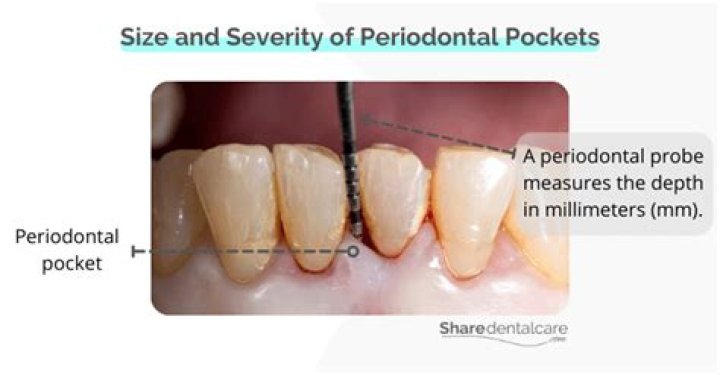
With proper treatment and preventive care, most people only see periodontal pocket depths between 4mm and 6mm. In extreme cases where gum disease is left untreated, periodontal pocket depts can reach 10mm or deeper, and at this point, the damage will likely need to be repaired with surgical grafting procedures.Does deep cleaning reduce pockets?
Deep teeth cleaning can help reduce the size of the pockets and slow or halt the progression of gingivitis gum disease.Do gums reattach after deep cleaning?
While any gum loss experienced due to gum disease will not grow back, the majority of patients can expect their gums to reattach after undergoing a deep cleaning. This is because all of the harmful bacteria has been removed, allowing the gums to once again be healthy.Can teeth be saved with periodontal disease?
Saving teeth from periodontal disease is possible if you detect the signs and symptoms early or regularly visit your dentist for cleanings and exams. Let the condition progress unhindered, and tooth loss should be considered as an eventuality.Can periodontitis go into remission?
Your periodontal disease will always need management, but can go into remission with appropriate treatment and the following practices: Brush at least twice a day, for two minutes. Floss at least once a day.What is Stage 4 periodontal disease?
In stage four the periodontal disease has taken a firm hold. Your gums will be visibly receding, exposing tender tooth enamel which can be easily damaged and then start to decay. The hidden damage to your jawbone will start to become noticeable as your teeth start to loosen, becoming wobbly or even moving position.Can deep cleaning stop periodontal disease?
The good news is that when treated in its early stages, gum disease can actually be reversed. Once full periodontitis has set in completely, it's irreversible. However, deep cleaning treatment can stop gum disease from advancing and causing severe health complications.How fast does periodontal disease progress?
Slight Periodontal DiseaseDuring the early gingivitis stages, gum inflammation can occur in as little as five days. Within two to three weeks, the signs of generalized gingivitis become more noticeable. If you still leave this untreated, it would progress to slight periodontal disease.