What age does your face fully mature?
It is generally accepted that facial growth is complete and implants can be placed in females at approximately 17 years of age and in males at approximately 21-22 years of age.Does your face shape change after 18?
In a word, yes. Your facial “look” will continue to emerge as you gain maturity, though not as quickly as it did prior to the age of 18. For example: Mandibular growth was found to be statistically significant for the age periods of 16 to 18 years and 18 to 20 years.Does your face structure change after 20?
As years pass, facial bones lose volume, contributing to the appearance of aging. Here, CT images show the skull of a woman between the ages of 20 and 40 (left) and the skull of a woman over 65 (right).Does facial structure change as you get older?
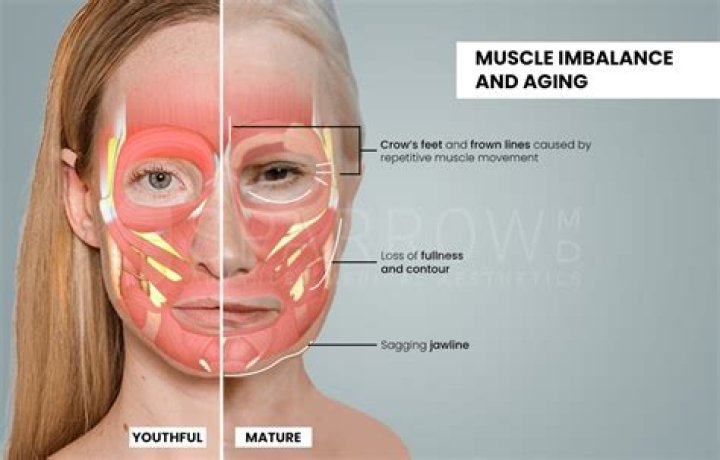
The appearance of the face and neck typically changes with age. Loss of muscle tone and thinning skin gives the face a flabby or drooping appearance. In some people, sagging jowls may create the look of a double chin.At What Age Does Your Face Change Most with Dr. Deschamps-Braly
Does jaw grow after 18?
Mandibular growth was found to be statistically significant for the age periods of 16 to 18 years and 18 to 20 years. Growth from 16 to 18 years was greater than that from 18 to 20 years. Maxillary and mandibular growth were highly correlated at each age period.Will my face change after 19?
Nope! In fact, your face changes even more after the age of 18. As you get older, your skin becomes thinner and less elastic, which can cause wrinkles and other signs of aging. You may also start to lose muscle mass in your face, which can make it look saggy.Do cheekbones change age?
"As we age and ligaments loosen, the fatty tissue in our cheekbones tends to drop down, making the cheeks look flat, the smile lines more prominent, and creating jowls along the jaw line."Which face shape ages the best?
Round faces tend to age very well compared to other face shapes due to the fact they store a lot of fat in the cheek area. This can keep you looking younger for longer than those who lose fat quicker.Does jawline change with age?
With age, we experience facial bone loss. This type of bone loss changes the dimensions and contour of our face, causing areas around our eyes to get larger, a decrease in the angle of our brow bone, and a less sculpted jawline.What age does jaw growth stop?
] determined the mandibular growth rate in 45 Danish males to be 3 mm between the ages of 16 and 17 years and decreased to no growth between 21 and 22 years. ]. Mandibular growth was found to be statistically significant for the age periods of 16 to 18 years and 18 to 20 years.How does your face change at 25?
You see, as you get older, your skin starts to get thinner, and once you hit 25, you might even take notice of this change. Yes, according to Healthline, your skin can and does actually get thinner as you age. And, according to Self, your skin starts to show signs of aging at 25, and as it ages, it can be thinner.Does your face shape change as a teenager?
Males develop more prominent jaws, cheekbones, brow ridges, and facial hair. Females develop fuller lips. Adolescents' own faces are changing, as are the faces of their peers.Why do I look so old at 25?
Increased concentrations of AGEs in the skin prevents efficient collagen repair which results in premature skin ageing. AGE not only affects your collagen, but also the elastin fibres resulting in a reduction of skin elasticity. This can be manifested as wrinkles, sagging, and dark circles around the eyes.Do high cheekbones age well?
“Women with a long, rectangular face show wrinkles and bone resorption more than those with a rounder face.” High cheekbones and prominent chins also reap the anti-ageing benefits. “ These structures help provide subcutaneous support, so thinning and sagging of the skin is less prominent,” explains Dr Shumack.Does your chin get bigger as you age?
Your chin will look different over time.The chin becomes more recessed, and skin loosens as the supporting bone shrinks. Other normal, age-related changes to the area, including skin laxity and a greater tendency to accumulate fat, can make the chin seem smaller still.