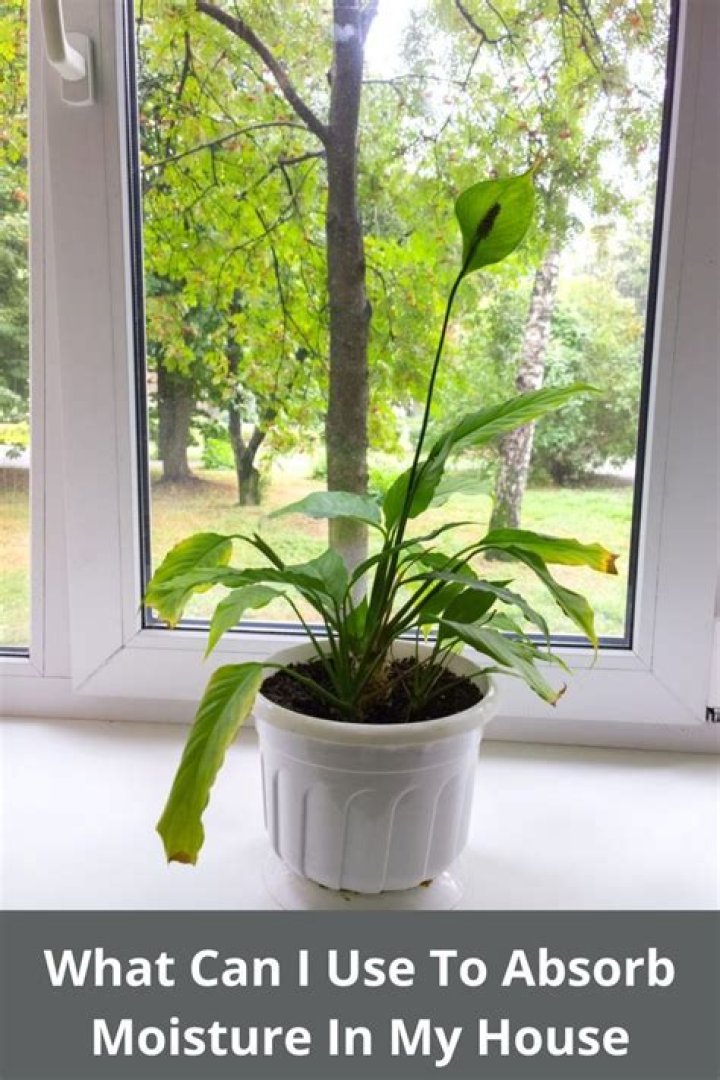
How can I make moisture absorber at home?
Baking Soda
- Get a small bowl that will fit in the area you'd like to place it in.
- Fill the bowl full of baking soda.
- Place the bowl in the area you'd like to dehumidify.
- The baking soda will harden as it absorbs moisture, and at that time, you'll want to replace it with fresh baking soda.
What product absorbs moisture the best?
- Methodology.
- Best Overall: DampRid Fresh Scent Refillable Moisture Absorber.
- Best Packets: Dry & Dry 1 Gram (200 Packets) Food Safe Silica Gel Packs Desiccants.
- Best Value: Vacplus Moisture Absorber Boxes (6 Pack)
- Best Design: Vacplus Moisture Absorber Packets, Fragrance Free (5 Pack)
Does baking soda absorb moisture?
Baking soda absorbs moisture, so it can help dehumidify your house. As a bonus, it's very cheap. Pour it into bowls, and cover them each with a thin cloth. Put them in various rooms around your house.Does table salt absorb moisture?
Yes, salts strongly absorb water. Salt compounds and water are polar in nature, so the force of attraction between them is quite strong. Salts that can absorb water are called hygroscopic. Above the 75% relative humidity, salt becomes deliquescent ie; it absorbs so much amount of water that it forms a solution.Make Your Own Safe Moisture Absorbing Packs
What can I use instead of Damprid?
For a cheap, homemade, energy-free, easy fix for room humidity that will help to reduce moisture levels, try baking soda. Simply place an open bowl of baking soda (sodium bicarbonate) anywhere that you have moisture problems—including cabinets and cupboards.Does Epsom salt absorb moisture?
Some salts such as magnesium sulfate (Epsom salt) are typically available in the hydrated form, where the salt crystal already contains a specific ratio of water molecules for each formula unit of ionic compound, and these salts are safe desiccants in their anhydrous form.What dries moisture?
Open windows and doors to help speed up the drying process. Use fans to move air around the damp walls. Also use dehumidifiers, which can help remove moisture from the air and walls. Professionals use tools like moisture meters, infrared imaging devices, dehumidifiers and heavy-duty fans.How do I keep my basement dry without a dehumidifier?
How to Keep Basement Dry Without a Dehumidifier
- Set Houseplants Near Windows. ...
- Hang Baking Soda In Plastic Bags.
- Use Fans in the Room. ...
- Purchase Carpeting Mats. ...
- Place Damp Rid in Your Basement. ...
- Install a Vent Fan. ...
- Add Extra Drainage and Waterproofing.
Can salt dehumidify a room?
If solving your moisture problem is something you'd like to do inexpensively, rock salt may be your answer. Because rock salt is hygroscopic it absorbs moisture from the air. If your plan is to get rid of the humidity in a damp basement, start with a 50-pound bag of sodium chloride to make your rock salt dehumidifier.How do you get moisture out of the air without a dehumidifier?
5 ways to reduce humidity levels indoors without a dehumidifier
- Improve the ventilation of your home.
- Turn on the air conditioner.
- Dry your clothes with a dryer or outdoors.
- Keep surfaces dry.
- Use desiccants.
Do candles help dehumidify?
Some websites also mention burning candles to help remove humidity, but we remain skeptical, since some candles made of hydrocarbons actually release CO2 and HO2 (water vapor) when burned.Does Damprid really work?
Damprid effectively removes humidity from the air but is best used in only certain situations. To remove excess moisture after a leak or flood, Damprid is an excellent choice that works very quickly. It can also be a good option for freshening up musty closets and dealing with moisture in a pinch.How do you dry air in a room?
- Run a fan to reduce dampness in a humid room. ...
- Open windows often if the outside moisture is lower than the inside moisture. ...
- Run an air conditioner if you have one. ...
- Place containers of desiccant in the room. ...
- Check the containers once or twice a week to determine how often they need to be tended.
Does rice absorb moisture?
Rice is a hygroscopic material. When dry rice is exposed to air with high relative humidity (RH) the rice grains will absorb water from the air (re-wetting). When wet rice is exposed to air with low RH the rice grains will release water to the air (drying).Does charcoal absorb moisture?
Just like a charcoal water filter, charcoal briquettes can be used to absorb moisture and odor from the air in your home.Which is better rice or silica gel?
Rice is most definitely not kingIt absorbed the least water in 24 hours, losing out to silica gel, cat litter, couscous, instant oatmeal, classic oatmeal and instant rice. More importantly, the sponge that we left in open air performed far better than any of the drying agents.
What kind of rice is the most absorbent?
Bomba rice is highly absorbent and requires more water to cook, and tends not to stick thanks to its high amylose (a type of starch) content.How do I keep the air in my bedroom moist?
Tips to humidify a room without a humidifier:
- Boil water.
- Get houseplants.
- Cook on the stove.
- Keep the bathroom door open when showering.
- Fill bowls with water.
- Dry your clothes inside.
- Let the bathtub water cool before draining it.
- Use stove steamers.