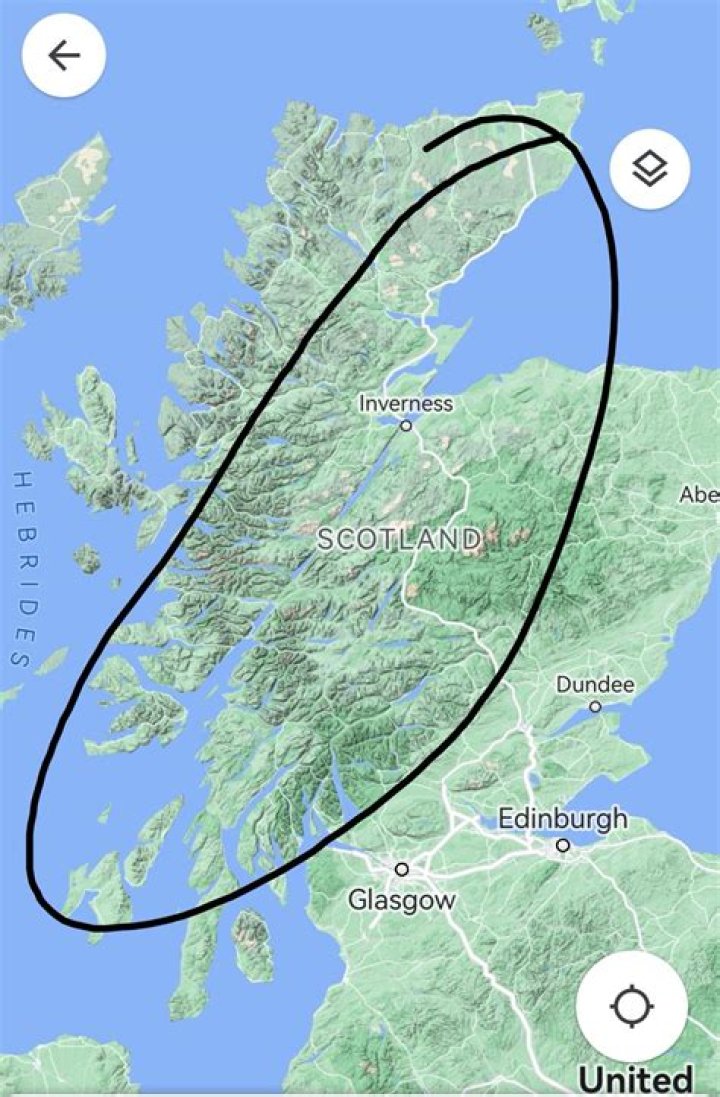
The Great Glen Fault is a long strike-slip fault that runs through its namesake, the Great Glen, in Scotland.Why does Scotland have a straight line through it?
The glaciers around the Great Glen started receding over 10,000 years ago, carving a deep valley along the fault line that actually goes below sea level, making that straight line through Scotland even more visible.
Why is there a line of lakes in Scotland?
The Great Glen Fault, Scotland
Visible from space, the Great Glen is a huge valley in the Scottish Highlands, eroded by glaciers more than 10,000 years ago. These glaciers carved the valley below present day sea level, forming a series of deep lakes, the largest and most famous of which is Loch Ness.
What caused the Great Glen in Scotland?
The Great Glen Fault has a long history of movements. It formed towards the end of the Caledonian orogeny (mountain building). It was caused by the collision of tectonic plates at the end of the Silurian period. The rifting continued into the early Devonian.
Where are the fault lines in Scotland?
The Highland Boundary Fault is a major fault zone that traverses Scotland from Arran and Helensburgh on the west coast to Stonehaven in the east.
Why There's a Straight Line Through Scotland
How many fault lines are in Scotland?
Geological boundaries
Four major faults divide Scotland's foundation blocks.
When was the last earthquake in Scotland?
Scotland struck by third earthquake in a week after two tremors hit over weekend. The 1.7 magnitude tremor struck at 6.28pm on Tuesday December 14 at Loch Hourn, with the epicentre on the remote Knoydart peninsular in the Highlands.
Is the Great Glen fault active?
The fault is still active but the main lateral movement appears to have been accomplished in Upper Devonian or Lower Old Red Sandstone times. The dynamical interpretation of the movement, moreover, indicates that the fault must have resulted from a regional compression which acted in a north and south direction.
How were Scottish Highlands formed?
The chain of volcanic islands collided with the Grampian Highlands about 480–460 million years ago. This is called the Grampian Event. Baltica collided with the Northern Highlands about 440 million years ago, pushing together the Northern Highlands and North-west Seaboard.
Why is Scotland so mountainous?
Volcanic activity occurred across Scotland as a result of the collision of the tectonic plates, with volcanoes in southern Scotland, and magma chambers in the north, which today form the granite mountains such as the Cairngorms.
What do they call lakes in Scotland?
Loch (/lɒx/) is the Scottish Gaelic, Scots and Irish word for a lake or sea inlet. It is cognate with the Manx lough, Cornish logh, and one of the Welsh words for lake, llwch.
Does Scotland have earthquakes?
Earthquakes are rare in Scotland and when they do occur they usually pass unnoticed, but the potential for a large damaging quake is taken seriously. In August 1816 an earthquake shook Scotland from the Pentland Firth coast in the north to Coldstream in the Borders.
Is the Great Glen A Rift valley?
Scotland's epic Great Glen is the gift of a dramatic tectonic collision that raised the Scottish Highlands and opened a giant crack across the entire width of the country.
How often do earthquakes occur in Scotland?
The earthquake in Scotland happened 10km below the Earth's surface, according to the United States Geological Survey (USGS). Around 200 to 300 earthquakes are detected a year by the British Geological Survey annually.
How was Loch Ness formed?
About 400 million years ago it sled southwest about 100km along the Great Glen fault to where it is now and created a long linear loch in-between the two land masses in the process. Loch Ness is a tectonic lake formed by the land converging around this Great Glen fault.
What was Scotland called before it was called Scotland?
The Gaels gave Scotland its name from 'Scoti', a racially derogatory term used by the Romans to describe the Gaelic-speaking 'pirates' who raided Britannia in the 3rd and 4th centuries. They called themselves 'Goidi l', modernised today as Gaels, and later called Scotland 'Alba'.
Are there any Scottish Highlanders left?
Nowadays there are more descendants from the Highlanders living outside Scotland than there are inside. The results of the clearances are still visible today if you drive through the empty Glens in the Highlands and most people still live in villages and towns near the coast.
Has Scotland always been attached to England?
Breadcrumb navigation. Eastern Avalonia collided with Laurentia about 425 million years ago, joining England and Scotland. This collision was less violent than those that led to the Grampian Event and the Scandian Event, and didn't cause huge amounts of rock deformation.
Where do the Scottish Highlands begin?
Scottish Highlands, also called Highlands, major physiographic and cultural division of Scotland, lying northwest of a line drawn from Dumbarton, near the head of the Firth of Clyde on the western coast, to Stonehaven, on the eastern coast.
Where is the Highland fault line?
The Highland Boundary Fault is a geological fault that crosses Scotland diagonally from Arran and Helensburgh on the west coast to Stonehaven in the east. It separates two distinctly different regions: the Highlands from the Lowlands.
Could the UK have a tsunami?
The short answer is no. Huge mega-thrust earthquakes like this only happen at plate boundary subduction zones where one of the Earth's tectonic plates is being pushed down, or subducted, beneath another.
Is the UK near a fault line?
Earthquakes are more common in the west of Britain, with north-west Scotland, Wales, and the West Midlands the most active. The most famous fault line, the Great Glen fault, runs along the length of the Great Glen from south-west to north-east Scotland, cutting through Loch Ness.
When was the last earth tremor in UK?
The last 3.8 magnitude earthquake was near Grimsby in north-east Lincolnshire, on 9 June 2018.
What does glen mean in Scottish?
When it comes to whisky, the word "glen," meaning "narrow valley" in Gaelic, is automatically associated with Scotch Whisky, the Scottish Whisky Association argued.
How deep is the Great Glen?
The statistics are just mind-boggling 22.5 miles (36.3 km) long and up to 755 feet (230 m) deep.